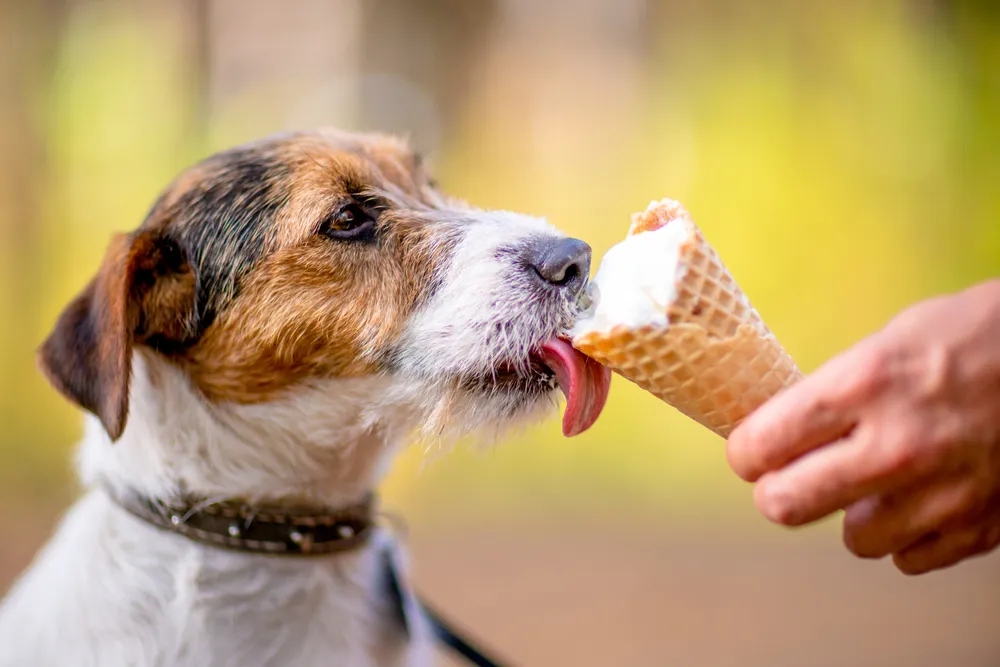
There is something about ice cream that makes sharing feel automatic. On a warm day, with a cone in hand and a dog staring up with hopeful eyes, it is easy to wonder whether a little taste is okay. The honest answer is that some dogs may handle a lick or two without much drama, while others may have a much harder time with dairy, sugar, fat, or the ingredients hidden in certain flavors.
So, can dogs eat ice cream? Traditional human ice cream can be tricky for many dogs, and some flavors bring along ingredients that are unsafe. This guide walks through the main risks, what to watch for if your dog has already gotten into some, and a few cooler alternatives that can still make treat time feel special. If anything seems off, your veterinarian is always the best place to start.
How Ice Cream Affects Dogs: Dairy, Sugar, and Fat
Ice cream usually brings three things to the table that can be tough on dogs: dairy, sugar, and fat. Many adult dogs have less lactase than they did as puppies, which makes lactose harder to digest. That does not mean every dog will react the same way, but it does help explain why a bowl of ice cream can lead to loose stool, gas, or vomiting in some dogs.
Sugar is another piece of the puzzle. Even when a flavor is not toxic, it can still be more sugar than a dog needs. Over time, frequent sugary treats may contribute to weight gain. High-fat treats can also sit heavily with some dogs, especially those who are prone to digestive upset or who may be sensitive to fat.
A few common ways ice cream can affect dogs include:
-
Gas or bloating
-
Loose stool or diarrhea
-
Vomiting
-
Discomfort after eating
-
Extra calories that add up fast
Every dog is different, which is why a small taste may barely bother one pup and upset another. When in doubt, a dog’s regular food, especially a complete and balanced option like Nom Nom meals, is usually a much steadier foundation than shared dessert.
Dangers of Dogs Eating Ice Cream: Ingredients to Watch
Not all ice cream concerns come from dairy alone. Some flavors and toppings include ingredients that can be dangerous for dogs, even in small amounts. That is why label reading matters more than the size of the scoop.
| Ingredient | Why it matters for dogs |
| Xylitol | A sugar substitute that can be extremely dangerous for dogs |
| Chocolate | Contains compounds that are unsafe for dogs |
| Raisins | Can be harmful even in small amounts |
| Macadamia nuts | May cause serious symptoms in dogs |
| Caffeine | Not safe for dogs and sometimes appears in mix-ins or desserts |
Xylitol is one of the biggest red flags. It is sometimes used in sugar-free desserts and can be extremely dangerous for dogs. Chocolate is another one to watch closely because it contains theobromine and caffeine, both of which dogs do not process well. Raisins, macadamia nuts, and any caffeine-containing mix-ins are also ingredients to avoid.
Rich, high-fat flavors can be a separate concern, especially for dogs that are already sensitive or have a history of pancreatitis. Even if a product does not contain a toxic ingredient, that does not automatically make it a good choice. When a flavor looks suspicious, or your dog has eaten something that worries you, it is smart to contact your veterinarian or a pet poison helpline and share exactly what happened.
What If My Dog Already Ate Ice Cream?
First, try to stay calm and gather the details. Note the flavor, the ingredients if you can see them, and about how much your dog ate. That information can be helpful if you decide to call your veterinarian. If the ice cream was plain and the amount was small, some dogs may only have mild stomach upset. If there is chocolate, xylitol, raisins, or another toxic ingredient involved, it is worth reaching out sooner rather than later.
Some dogs may simply seem a little off, with gas, loose stool, or a single episode of vomiting. More concerning signs include repeated vomiting, extreme lethargy, pain, trembling, or behavior that feels unusual for your dog. As one veterinary reminder puts it, “When a pet seems unwell, it is always better to call.” That is especially true when the ingredient list includes something unsafe.
Dog-Friendly Frozen Treat Ideas (Beyond Ice Cream)
If your dog loves being part of the moment, there are gentler frozen treats that can feel just as fun without relying on human ice cream. Some pet parents choose dog-specific ice cream that is formulated with canine digestion in mind. These products can still vary by brand, so label reading still matters.
A few easy options include:
-
Frozen banana slices or blended frozen banana
-
Plain ice cubes or ice chips for a simple cool-down
-
Dog-specific ice cream made for canine diets
-
Homemade frozen treats using dog-safe ingredients
-
Small portions of blended recipes like smoothie pupsicles
Simple ingredients often work best. A frozen banana treat can feel playful without adding a lot of complexity, and some dogs enjoy a tiny spoonful of blended peanut butter and banana if the ingredients are safe and xylitol-free. Plain ice cubes can also be enough for dogs that just like crunching on something cold. For many families, the goal is not to create a perfect dessert. It is just to offer a small, dog-friendly way to join the fun.
Dog Ice Cream vs. Human Ice Cream: How to Choose
Dog-specific ice creams are generally designed with canine digestion in mind, while human ice cream is built for people and often includes more dairy, sugar, and rich add-ins. That said, dog ice cream is not automatically right for every dog. The ingredients still vary, and some products are better suited to certain dogs than others.
| Type | What to look for |
| Dog-specific ice cream | Fewer risky ingredients, simpler formulas, portion-friendly servings |
| Human ice cream | Higher dairy, sugar, and fat, plus possible toxic add-ins |
| Both | Check for xylitol, chocolate, raisins, and other red flags |
Portion size matters too. A tiny dog and a large dog should not get the same serving just because the treat looks small in your hand. Even with dog-friendly options, treats are usually best kept occasional rather than everyday. If you are looking for more snack ideas beyond frozen treats, our guide to top 10 human foods dogs can eat can help you keep a few simple, safer options in mind.
Portion Size, Frequency, and Special Considerations
A gradual approach tends to work best with any new treat. Many pet parents start with a very small taste and see how their dog does over the next several hours. Some dogs do well with the occasional frozen bite, while others may be more sensitive and need to skip rich treats altogether.
Here are a few gentle guidelines to keep in mind:
-
Start small, especially with a new frozen treat.
-
Watch for changes in stool, appetite, or energy.
-
Keep servings modest, particularly for small dogs.
-
Offer treats occasionally instead of turning them into a daily habit.
-
Ask your veterinarian before trying rich treats if your dog is a puppy, a senior, or has conditions like diabetes or a history of pancreatitis.
Dogs with sensitive stomachs, weight concerns, or known health issues may need a more tailored plan. That is where a conversation with your veterinarian can be especially helpful. A treat that feels tiny to a person can still be a lot for a small dog, so modest portions usually make the most sense.
Minimally Processed Treats and Gently Cooked Options
Some families prefer treats that are closer to whole foods and easier to recognize on the label. That is part of the appeal of minimally processed snacks and gently cooked dog food. These options are often made with simple ingredients and clear recipes, which can make treat time feel more transparent and less guesswork-heavy.
For a cool-weather twist, some pet parents freeze small portions of balanced, gently cooked meals as an occasional snack. Others keep it even simpler with plain banana or a dog-safe frozen recipe. The idea is not that one approach is perfect for every dog. It is that simple, thoughtfully prepared treats can be a comfortable choice for families who want to keep things straightforward.
FAQs About Dogs and Ice Cream
Can dogs have vanilla ice cream?
A tiny taste of plain vanilla ice cream may not bother some dogs, but that does not make it an ideal treat. Even vanilla versions often still contain dairy, sugar, fat, and artificial sweeteners, like xylitol, which can be hard on a dog’s stomach.
Can dogs eat chocolate ice cream?
Chocolate ice cream is a poor choice for dogs because chocolate itself is unsafe. Chocolate chips, fudge swirls, and chocolate toppings are also ingredients to avoid.
Can dogs eat ice cream cones?
Cones are not the best option. They usually add extra sugar and processed ingredients without really making the treat better for dogs.
Can dogs eat sorbet?
Fruit-based sorbet may seem lighter, but it can still be high in sugar. It is worth checking the ingredient list carefully before sharing any spoonful.
Can dogs have milkshakes?
Milkshakes are usually even richer than ice cream, which can make them tougher on many dogs. The dairy load and sugar content can be a lot for a canine stomach.
Takeaways
So, can dogs eat ice cream? In some cases, a small amount may be okay, but human ice cream is often a risky choice for dogs because of dairy, sugar, fat, and possible toxic ingredients. Safer frozen options are usually the better path, especially when you keep ingredients simple and portions modest.
When you want to give your dog a fun food moment without the guesswork, look for treats that fit their needs and their tummy. And if you are ever unsure about a specific flavor, ingredient, or reaction, your veterinarian can help point you in the right direction.