New puppy in the house? Congrats! Nom Nom is here to provide insights and guidance on exactly how much, when, and what to feed your puppy, including a helpful feeding guide.
(Pssst, spoiler: If you’re just here for your dog’s daily caloric needs, skip to the calculator or puppy feeding chart.)
The Importance of Proper Puppy Nutrition
When it comes to feeding, it’s tempting to tell yourself a puppy is a puppy. But the truth is, food formulated for puppies is actually quite different than food formulated for older dogs.
Young dogs need higher levels of protein, fat, calcium, and phosphorus when compared to adult dogs. Feeding puppies too few of these can cause deficiencies — though too many can cause lifelong complications.
How Much to Feed a Puppy Based on Weight
Most people worry that they need to change their puppy’s calorie and food amount every day because they’re constantly growing. That’s not necessarily true. To promote normal growth, most puppies need to be fed the same number of calories, and food, from about 4 months of age to 12 months of age.
Step 1: Determine your dog’s predicted adult weight.
| Breed | Male | Female |
| Border Collie | 70 lbs | 60 lbs |
| Doberman Pinscher | 85 lbs | 75 lbs |
| German Shepherd | 75 lbs | 60 lbs |
| German Shorthaired Pointer | 65 lbs | 65 lbs |
| Golden Retriever | 70 lbs | 60 lbs |
| Great Dane | 160 lbs | 130 lbs |
| Labrador Retriever | 70 lbs | 60 lbs |
| Mastiff | 200 lbs | 150 lbs |
| Poodle (Standard) | 65 lbs | 45 lbs |
| Rottweiler | 115 lbs | 90 lbs |
For small dog breeds, the weight difference between male and female isn’t quite as pronounced.
| Boston Terrier | 18 lbs |
| Chihuahua | 5 lbs |
| Dachshund / Mini Dachshund | 10 lbs / 10 lbs |
| French Bulldog | 22 lbs |
| Maltese | 6 lbs |
| Miniature Poodle | 12 lbs |
| Pomeranian | 5 lbs |
| Pug | 16 lbs |
| Shih Tzu | 12 lbs |
| Yorkshire Terrier | 7 lbs |
Step 2: Take their estimated adult weight and match it to the type of food you’re feeding them.
Puppy Feeding Chart
| Estimated Adult Weight (lbs) | Dry Food | Canned Wet Food | Other Fresh Food |
| 5 | 213 | 202 | 192 |
| 6 | 244 | 232 | 220 |
| 7 | 274 | 260 | 247 |
| 8 | 303 | 288 | 273 |
| 9 | 331 | 314 | 298 |
| 10 | 358 | 340 | 322 |
| 12 | 410 | 390 | 369 |
| 15 | 485 | 461 | 437 |
| 18 | 556 | 529 | 501 |
| 20 | 602 | 572 | 542 |
| 25 | 712 | 676 | 641 |
| 30 | 816 | 775 | 734 |
| 35 | 916 | 870 | 824 |
| 40 | 1013 | 962 | 911 |
| 45 | 1106 | 1051 | 995 |
| 50 | 1197 | 1137 | 1077 |
| 55 | 1286 | 1221 | 1157 |
| 60 | 1372 | 1304 | 1235 |
| 65 | 1457 | 1384 | 1312 |
| 70 | 1541 | 1464 | 1387 |
| 75 | 1622 | 1541 | 1460 |
| 80 | 1703 | 1618 | 1533 |
| 85 | 1782 | 1693 | 1604 |
| 90 | 1860 | 1767 | 1674 |
| 100 | 2013 | 1913 | 1812 |
| 110 | 2162 | 2054 | 1946 |
| 120 | 2308 | 2193 | 2077 |
| 130 | 2451 | 2328 | 2206 |
| 140 | 2591 | 2462 | 2332 |
| 150 | 2729 | 2592 | 2456 |
| 170 | 2997 | 2847 | 2697 |
| 190 | 3258 | 3095 | 2932 |
| 210 | 3512 | 3336 | 3161 |
| 230 | 3760 | 3572 | 3384 |
To note: When feeding a puppy, never rely on recommendations like “1 cup” across the board — much like a size 10 differs from clothing brand to clothing brand, 1 cup of one brand of dog food will be completely different than 1 cup of another.
How Often to Feed a Puppy
For quick reference, here’s how your first year-and-a-half of puppy feeding should go. After that? Well, your puppy won’t be so much a puppy anymore.
| Frequency | Nom Nom Notes | |
| Months 0-3 | Feed puppies at least three to four times daily | The first months are full of rapid growth, so make absolutely sure your pup is getting enough to eat. We recommend at least three times daily. |
| Months 3-6 | Start weaning to a twice-daily feeding schedule if possible, or switch to grazing if your puppy is able to self-regulate. | Dogs will grow quickly between 4 and 6 months, but can also become overweight if overfed. Overweight puppies, especially large breeds, have a predisposition toward orthopedic (or bone) problems, so although an overweight puppy might be considered cute, it’s a health risk. |
| Months 6-12 | Feed puppies twice daily | Both small and large breed dogs will start to become obese even at this age if they are overfed. Large dogs may even be ready for adult food, so be careful with their intake when feeding large breed puppies and monitor their weight carefully. |
| Months 12-18 | Feed puppies twice daily | Small or medium-sized dogs can move to adult food around this time. If you’re feeding your puppy an all-life-stages food, there’s no need to change it — just make sure you’re paying attention to portion control. |
How Much to Feed a Large Breed Puppy
Closely monitor calorie intake when feeding your puppy. The effects of too much calcium and too many calories are most pronounced in large breed dogs, so it’s critical to feed large breed puppies appropriate food.
Do not feed your puppy according to any chart exclusively. Even within a breed, metabolism and energy needs may vary by up to 30 percent, and you’ll likely need to adjust feeding portions accordingly.
How Much to Feed a Small Breed Puppy
-
Small breeds become adults faster and may see their metabolism slow more quickly than large breeds (especially if they’re being carried everywhere), which may change how much you feed your small breed puppy and how often.
-
Treats designed for average dogs could contribute as much as a quarter of your little puppy’s caloric needs for the whole day, so be wary of how often you’re doling them out.
-
Use the parents’ weights as a guide if you can. There are some significant differences in sizes from breeder to breeder with small-breed dogs.
Big or small, consult the information below while you’re eyeing up your pup to see whether you need to make some mealtime tweaks on when and how much to feed your puppy.
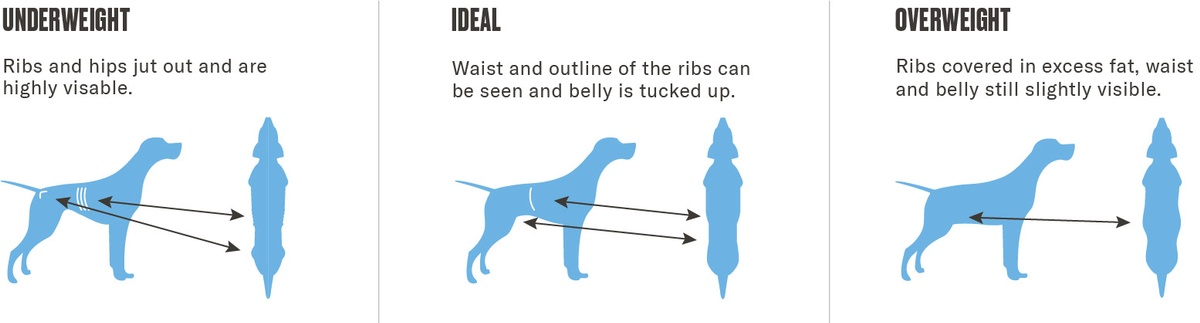
Kibble vs. Fresh vs. Raw Puppy Food
Not everyone realizes it at first, but fresh puppy food like Nom Nom is different from traditional wet food, and very, very different from kibble.
Not all calories are created equal. And when you take kibble calories compared to fresh food calories, that’s never more evident. Fresh dog food is often much more digestible than processed kibble, or even processed wet food, so your dog can get more energy and nutrients per bite.
High-quality fresh dog food is more digestible and allows your pup’s body to better absorb nutrients.
Some foods may be more digestible than others and have calories which are more accessible because they’re broken down better during digestion. Both fresh and kibble foods vary widely in ingredients and in fiber content, but cooked foods are likely more digestible.
For those curious to know how this translates to actual calorie counts, it all comes down to how The Association of American Feed Control Officials — or AAFCO (the group that designs pet food guidelines) says calories should be calculated. With kibble diets, AAFCO says that food should be calculated with carbs and proteins at 3.5 calories per gram and fat at 8.5 calories per gram.
Put simply, if you use a recommended calorie amount from kibble for a fresh dog food diet, your puppy will likely pack on excess weight, because they’re actually able to digest and use much more food from every gram. A good problem to have.
How much kibble to feed a puppy
To determine how much kibble to feed your puppy; determine their estimated adult weight; refer to our chart below to find their daily caloric needs, and then look up the “calories per serving” on the nutrition facts label on your kibble. You should be set.
But… then again, what exactly is kibble?
The truth is, not everyone knows how their pet’s food is made, especially when it comes to kibble. To produce kibble, a mixture of carbs, plant or animal protein, and fats of various quality (and unspecified sources) are mixed into a paste. An extrusion process forces these ingredients together and processes them into nuggets to create the shape that we associate with kibble. After these nuggets are made, animal fat is typically sprayed on the kibble to increase palatability.
Not pretty. And all that varies brand to brand, so you almost never know the true quality inside. Here’re some of the more common fillers you’ll find listed on the kibble bag, and what they actually mean.
| What it’s called | What it means |
| Meat byproducts | Non-rendered non-meat from animals aka lungs, spleen, kidneys, brains, liver, fatty tissue, stomach and intestines |
| Meat meal | Rendered mammal tissues mostly without hair, hoof, horn or stomach contents |
| Poultry | A combination of flesh and skin, derived from parts of carcasses |
| Poultry byproducts | Non-rendered carcass portions, such as heads and feet |
| Poultry byproduct meal | Ground and rendered carcass parts, including necks, feet and undeveloped eggs |
| Poultry meal | Rendered flesh and skin derived from carcasses |
How much raw food to feed a puppy
Raw dog food — usually a mix of raw meat, bones, organ meats, and perhaps some fruits and veggies — has been seen as something of a fad diet in the dog world over the past few years. Typically clocking in around 1.5 calories per gram — or 45 calories per ounce — raw food still comes with its pros and cons.
The pros:
- It’s minimally processed — something we believe all dogs deserve.
- It’s often more digestible than kibble, thanks to the more natural ingredients
The cons:
-
Raw food often carries bacteria with it, so much that the FDA has recommended against feeding a raw diet to puppies to help prevent the spread of certain foodborne illnesses
-
Raw dog foods are typically high in fat. This is because the animal meats used to make these products get more expensive as they become leaner.
Raw meat-based diets carry a number of documented benefits for puppies, like a shinier coat, smaller stools, improved appetite and a general wellness boost. Cooked, fresh dog food simply lets you and your pup reap all these same rewards of raw dog food, with none of the cons.
Last but not least — transitioning from puppy food to adult dog food
Thankfully, making the transition from puppy food to adult food isn’t all that complicated, and it doesn’t have to take long.
Mix the Puppy and Adult Foods
Over the course of about a week, gradually add in the adult food while reducing the amount of the puppy food in their bowl. Midway through the week you should be at about half-and-half, and by the end of the week they’ll be fully switched.
Pay attention to your puppy’s poop.
If you do notice a change in the quality of your puppy’s stool (e.g. it’s runny or discolored), it’s likely due to variable amounts of fiber or different nutrient levels. Slow up the transition from puppy food to adult food, and most dogs will adapt just fine.