Let’s explore which fruits puppies can eat, which ones should stay off the menu, and how to serve fruit safely.
Understanding Puppies’ Diet and Nutritional Needs
Puppies grow quickly, and their bodies need consistent nutrition to support healthy development. A complete puppy diet provides the right balance of protein, fat, carbohydrates, vitamins, and minerals to support bone growth, brain development, and immune health.
Treats like fruit play a role in training and enrichment, but they should never replace complete meals. Puppies also have smaller digestive systems than adult dogs, which means sudden changes or rich foods can lead to upset stomachs. Keep an eye on how your pup reacts to any new foods.
Can puppies eat fruit? The short answer
Puppies can eat some fruits in small amounts as occasional treats. The key is moderation, careful preparation, and close observation after introducing something new. Certain fruits offer nutrients like fiber, antioxidants, and natural hydration that can help support digestion and overall wellness when fed appropriately.
Fruit should always be treated as a bonus, not a staple. Start with very small pieces and introduce only one fruit at a time. Preparation matters just as much as selection, since seeds, pits, rinds, and skins can pose choking or digestive risks. Treats, including fruit, should make up no more than 5 to 10 percent of your puppy’s daily calories. Pause fruit treats if you notice diarrhea or vomiting.
Safe fruits for puppies (and why)
Some fruits can be a fun and healthy treat for puppies when offered in small portions and prepared properly. These fruits provide vitamins, fiber, hydration, and antioxidants to support overall wellness while still keeping calories in check. Always wash fruit, remove seeds, pits, stems, and rinds, and cut pieces into small, puppy-friendly bites.
In general, puppies can eat the following fruits:
-
Apples: A crunchy, low-calorie treat with vitamin A, C, potassium, and fiber. Remove the core and seeds first.
-
Bananas: Soft and easy to chew, with potassium and fiber. Offer small pieces because bananas are higher in natural sugar.
-
Blackberries: Low in calories and rich in antioxidants. Serve a few at a time and monitor for tolerance.
-
Blueberries: Bite-sized and packed with vitamin C, fiber, and antioxidants. Great for training rewards.
-
Cantaloupe: Hydrating and nutrient-rich with vitamins A and C. Remove rind and seeds before offering small chunks.
-
Cranberries: Tart and rich in fiber and antioxidants. Use small amounts or look for dog treats made with cranberries.
-
Honeydew Melon: Sweet, hydrating, and safe in moderation with no seeds or rind.
-
Kiwi: A good source of vitamin C and fiber. Remove skin and seeds and offer tiny pieces.
-
Mangoes: Rich in vitamins A, B6, C, and E. Remove the pit and serve in moderation due to natural sugars.
-
Oranges: Juicy and high in vitamin C and potassium. Offer only the flesh in small amounts.
-
Peaches: Provide fiber and antioxidants. Remove the pit and skin before serving small portions.
-
Pears: A fiber-rich snack with vitamins C and K. Core and seeds should be removed first.
-
Pineapple: Hydrating and full of antioxidants. Peel all skin and feed in small portions to avoid digestive upset.
-
Raspberries: Antioxidant-rich with a bit of natural sugar. Limit amounts and watch for tummy sensitivity.
-
Strawberries: Sweet and nutritious with vitamin C and fiber. Wash and slice for easy snacking.
-
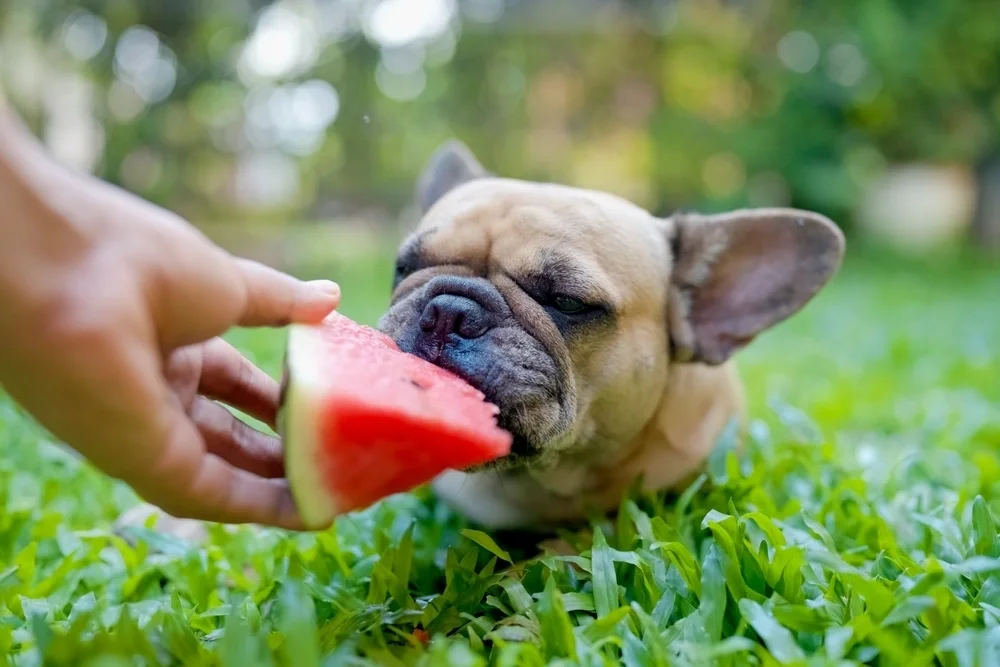
Watermelon: A refreshing, hydrating treat packed with vitamins and mostly water. Remove rind and seeds first.
-
Tomatoes: Ripe tomato flesh offers potassium and vitamins A and C. Avoid stems, leaves, and unripe parts.
Always consult with your veterinarian before giving your puppy new foods, including fruit.
Fruits to avoid: toxic or unsafe for puppies
Some fruits or parts of fruits contain substances that can make puppies sick. These foods can affect digestion, organs like the kidneys, or even breathing. If your puppy ever eats something on this list, call your veterinarian right away for guidance.
-
Grapes and Raisins: Grapes and raisins are highly toxic to dogs and can lead to severe kidney injury, even in small amounts.
-
Avocado: Avocados contain persin, which can cause vomiting or diarrhea. The pit is also a serious choking and blockage risk.
-
Cherries: Cherry pits, stems, and leaves contain cyanide compounds that can interfere with oxygen transport and create serious health risks.
-
Fruit Pits and Seeds: Pits and seeds from many stone fruits contain cyanide-related compounds and can cause choking or digestive blockages.
-
Unripe Tomatoes: Unripe tomatoes and plant leaves contain solanine, which can irritate the digestive and nervous systems if eaten.
-
Wild or Unknown Berries: Some berries that grow outdoors can be toxic to dogs. Identification can be difficult, so it is safest to avoid offering any wild berries.
-
Plums: Plum pits contain cyanide and pose both toxicity and choking risks. The flesh can also upset a puppy’s stomach due to its sugar content.
-
Figs: Figs can cause digestive upset, drooling, or skin irritation in dogs. Reactions may include vomiting or diarrhea, especially in puppies.
-
Lemons: Lemons are highly acidic and can irritate a puppy’s digestive system. The peel and seeds also contain compounds that may cause discomfort or toxicity in larger amounts.
Prep and serving tips to keep puppies safe
Careful preparation helps reduce many common risks. Wash fruit thoroughly, then remove rinds, pits, cores, seeds, stems, and tough skins. Cut fruit into small, soft pieces that are easy to chew and swallow.
Skip dried, canned, or sweetened fruits, along with fruit juices. These products often contain added sugars or ingredients like xylitol that are unsafe for dogs. Introduce fruit slowly and keep an eye on stool quality, energy level, and skin after each new food.
Call your veterinarian if you notice vomiting, diarrhea, or unusual lethargy.
Signs of a bad reaction and when to call your vet
Most puppies tolerate small amounts of safe fruit without issue, but reactions can happen. Watch for vomiting, diarrhea, low energy, tremors, or seizures after eating fruit. Choking, repeated gagging, or coughing also require immediate attention.
Suspected grape or raisin ingestion is always an emergency. Have your puppy’s weight and the amount eaten ready when calling your veterinarian. Do not induce vomiting unless your vet specifically instructs you to do so.
Better-for-puppy treat ideas and training tips
Fruit works best as a strategic treat rather than an everyday snack. Small portions help keep your puppy motivated during training while still supporting balanced nutrition.
Use fruit as a high-value reward in tiny amounts. One or two blueberry pieces mixed with kibble can add excitement to training sessions without tipping the calorie balance. On warm days, a simple frozen cube made with water and a few small fruit pieces can offer enrichment and hydration.
Rotating lower-sugar fruits may help reduce the risk of digestive upset. Puppies with sensitive stomachs may do better with fruit only on occasion.
Preventive Care: Keeping Your Puppy Safe Around Fruit
Safe feeding starts with safe storage. Always keep fruit out of reach on counters or in sealed containers to prevent accidental snacking. Dispose of pits, rinds, and cores promptly so curious puppies cannot get into them.
Share fruit intentionally rather than casually. A little planning goes a long way toward preventing avoidable health issues.
Conclusion: Should You Let Your Puppy Eat Fruit?
Some fruits can be safe for puppies when offered in moderation and prepared with care, while others should always be avoided. Paying attention to portion size, proper prep, and your puppy’s individual tolerance helps reduce the risk of digestive upset or more serious reactions. When questions come up, your veterinarian can help guide decisions that support your puppy’s health at every stage.
Fruit works best as an occasional treat, not a nutritional staple. Growing puppies need a complete and balanced diet to support healthy development, and that nutrition should come primarily from their meals. Nom Nom’s gently-cooked meals are designed to provide puppies with the protein, fat, vitamins, and minerals they need as they grow, so treats like fruit can stay an extra, not a substitute.