How often is the exclamation “bad dog!” heard in your home?
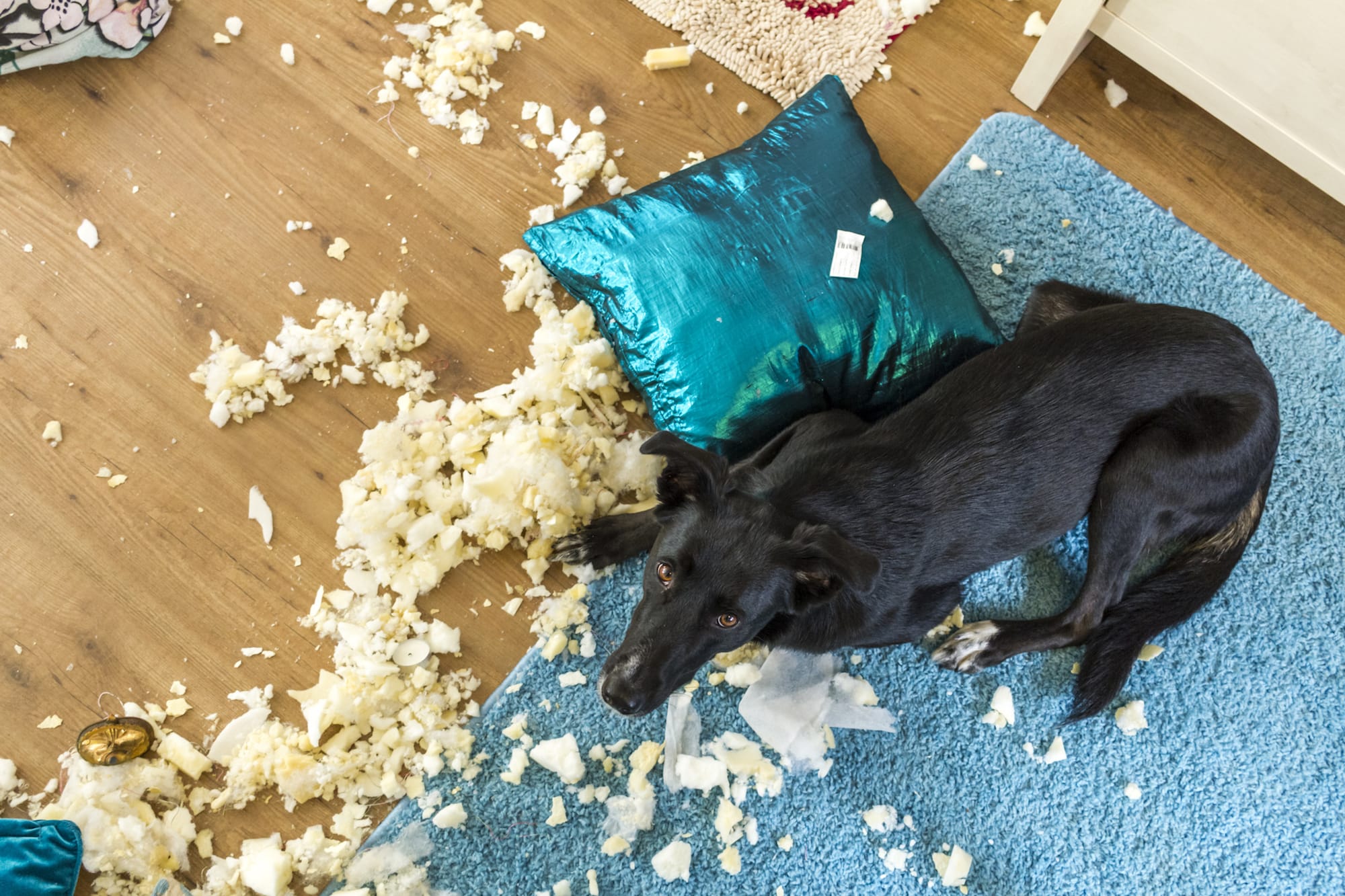
Perhaps you have walked into a room to see your dog asleep amid a pile of half-eaten trash, or a chewed-up pair of expensive shoes, and you can barely hold back your frustration. Most pet parents can certainly relate, especially if they have a rambunctious puppy.
However, most (if not all) of the time, we should be looking at how we may have enabled or even rewarded this “bad” behavior. Although some research shows that dogs may have a rudimentary concept of morality (possibly learned from years of being around humans), they generally do not go out of their way to do “bad” things on purpose.
Dogs have relatively limited ways to communicate with their human family, so in cases where dogs do engage in destructive behaviors, it is typically a sign that they need something from their pet parent.
Is It Separation Anxiety?
Sadly, one very common explanation for destructive behavior is separation anxiety.
Many pet parents work long hours and may need to leave their dogs at home during the day. The distress that a dog feels when isolated for too long is real, and this frequently leads to disruptive and destructive behavior. In the worst cases, dogs suffering from separation anxiety may cause extreme damage to the home and also injury to themselves.
If you have been wondering why your dog engages in destructive behavior, pay close attention to what he does as you are about to leave the house. Does he pace, whine, bark, or engage in attention-seeking behaviors? If he shows signs of distress as you are gathering your keys and coat or putting on your shoes (and he never behaves in a destructive manner until you have departed for the day), then it is possible he may have a case of separation anxiety.
To relieve some of his stress when you are away, he may simply be distracting himself from boredom by chewing, scratching, shredding, or otherwise destroying furniture or other household items.
How Can I Help My Dog Through This?
If it is truly a case of separation anxiety, you may wish to speak with an animal behaviorist to develop a plan to desensitize your dog to being alone and get him to feel “okay” when you are not around. However, there are a few basic things you can try to help your dog to feel better.
First, consider leaving a stimulating treat-stuffed puzzle toy for your dog in your absence to combat boredom. Make this a special toy and treat combination that he only gets when you leave the house. He should eventually build the association between the treat and your absence, and this may ease his anxiety somewhat.
Next, desensitize your dog to any pre-departure cues that cause symptoms of distress. One day when you are not actually planning on leaving the house, observe his behavior in response to your typical pre-departure routine: brushing your hair, for example, or putting on your shoes. If he shows any sign of nervousness, repeat the behavior several times in a row until he is calm.
You can even go so far as to pick up your keys, walk out the door, and then return a few short minutes later. Repeating this several times and increasing the duration gradually can help your dog get the message that you are not leaving forever when you depart in the morning.
Likewise, it is helpful to avoid fussing over your dog before your departure or immediately following your return. Remain calm and happy, and act as though everything is completely fine, even if your dog is showing signs of distress. Obviously, if it appears he may injure himself in his distress, then you can act to put a stop to his behavior, but babying him at these times may worsen his anxiety.
What If It Is Not Separation Anxiety?
Destructive behavior does not necessarily mean that your dog is suffering from separation anxiety. For puppies, the simple need for teething is one potential contributing factor in cases of destructive chewing. Between the ages of 3 and 6 months, puppies go through the sometimes painful process of losing their baby teeth and growing in their adult teeth. During this period, puppies often chew on anything and everything they can as a distraction from their discomfort. If you find your pup in the middle of chewing up the sofa during this stage of his life, he is likely in desperate need of an appropriate outlet for his need to chew.
Even beyond the teething years, adult dogs do have a natural need to chew. Be sure to give your dog plenty of opportunities to chew on the right things, and gently correct him when he chews on no-no items. With an adult or senior dog who simply does not know what he is supposed to chew on, you need to slowly teach him what is okay and not okay to chew.
Whether an adult dog or a puppy, if the need to chew is at the root of canine destructive behaviors, you must ensure that your dog is closely supervised whenever he might have access to items that he is liable to destroy. (This gives you ample opportunity to offer him gentle verbal correction if you see him going after your leather boots or your couch cushions.) When you are not at home with your dog, you should confine him to a crate or to a room where there are no stray articles left on the floor for him to get into.
It may seem boring for your dog to be confined to a crate when you are away, but this is as much for the safety of your home as the safety of your dog—after all, broken teeth and intestinal obstruction can be costly or worse. It is best for everyone if your dog only chews objects that are safe to chew under your close supervision.
What If It Happens Again?
Above all, remain calm and patient with your dog. Regardless of the reason for the destructive behavior, it does not help to get emotional about the ripped up furniture. After all, dogs’ short-term memory is short, so your dog most likely does not even remember shredding your shoes by the time you get home.
Instead, practice compassion for your dog, and make it easy for him to succeed. He is not guilty; he simply needs guidance. Whether that means working with a behaviorist to get to the root of his anxiety, keeping him confined to a safe area when you are absent, or taking the time to teach him what is and is not appropriate to chew, it is up to you to gently lead your dog to the proper behavior.