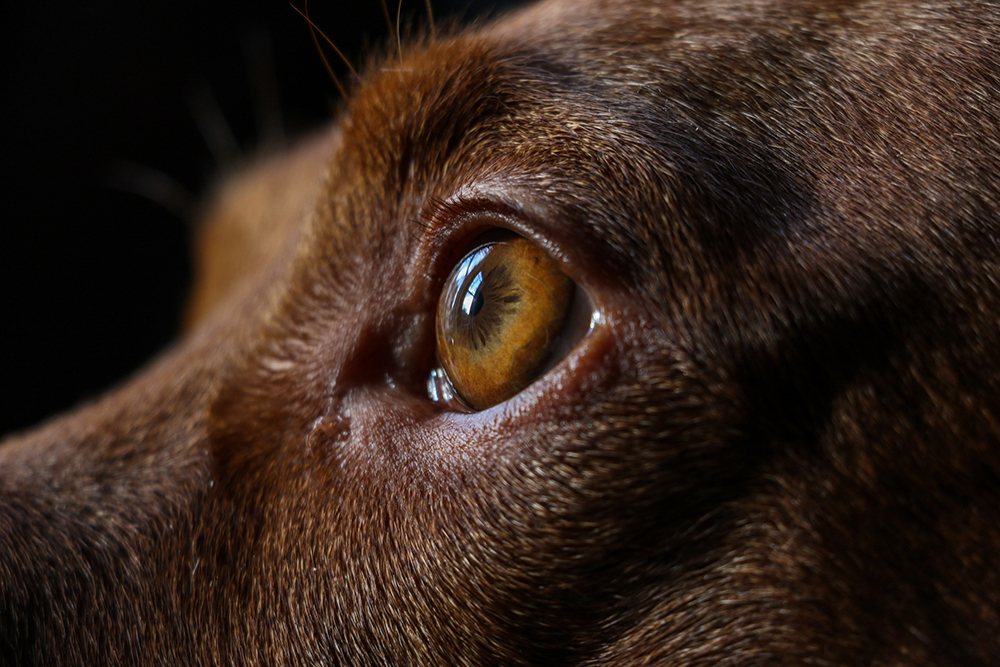
Is your dog’s eye red and swollen, or is there green discharge coming from their eyes? This could be an eye infection, inflammation, or something more serious going on. With a dog’s eyes, a simple eye infection can become very serious very quickly. Dogs do not know not to scratch their eyes or rub their face on the carpet. As soon as you notice anything wrong with your dog’s eye, it would be best for your vet to see your dog.
What Is Conjunctivitis?
Conjunctivitis is the medical term for inflammation of the thin layer of covering over the inside of the eyelids and white part of the eye. This is also commonly known as pink eye in people. The cornea is another thin transparent layer over the center of the eye that also can be infected or inflamed, but is technically separate from the conjunctiva.
How does my dog get Eye Infections?
There are many things that can cause conjunctivitis in dogs. These include:
- Allergies
- Foreign material stuck in your dog’s eye
- Dry eye
- Tear duct issues
Symptoms of Eye Infections in Dogs
Most of the symptoms of eye infection are very easy to see. These are common signs that would indicate that your dog has an eye infection or inflammation and that they should see a vet right away.
- Redness of the eyes, especially the white part
- Swollen eyelids
- Protrusion of the third eyelid, a protective covering in the lower part of the eye socket that helps sweep material from the eye and also protects the eye
- Green discharge from the eyes
- Squinting eyes, especially in bright lights
- Crusty eyes
- Pawing at the eyes
- Keeping their eyes closed
If you notice any of these issues, it would be best to see your vet. Mild eye issues can turn into something more severe very quickly if left untreated.
Treatment of Eye Infections in Dogs
If your dog is showing any signs of conjunctivitis, it is best to make an appointment with your vet right away. Your vet will examine your dog’s eyes and prescribe antibiotic eye drops. Regardless of whether an infection is found, drops may contain an antibiotic as a preventative measure. Anti-inflammatories and antihistamines may also be part of the drop. It’s important to not use a drop without veterinary advice, because some may be harmful if used to treat the wrong condition.
Your vet will check your dog’s eyes for a scratch on the surface of the eye and make sure that their eyes are producing enough tears to keep the eyes moist. They may also check the pressures in your dog’s eyes to make sure that they are not developing glaucoma.
Eye infections are not something that you should attempt to treat at home. If left untreated, your dog could potentially lose vision in their eye or damage the eye even more and lose their eye.
Preventing Eye Infections in Dogs
There are certain dogs that are more prone to eye issues. Dogs with short noses or brachiocephalic breeds can develop eye issues more commonly than other dogs. If you have one of these breeds of dogs, monitor their eyes for any signs of trauma or infection. As soon as you notice anything, take them to your vet for an exam.
Final Thoughts
If your dog has a discharge from their eyes or seems like there is something bothering their eyes, it is best for you to see them right away. Never attempt to treat eye infections at home as they can become very bad very quickly. While an eye infection can be uncomfortable and irritating to your dog, with early treatment and correct management, your dog can easily recover and return to its normal life.