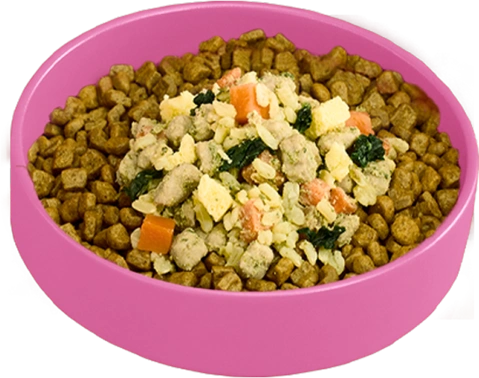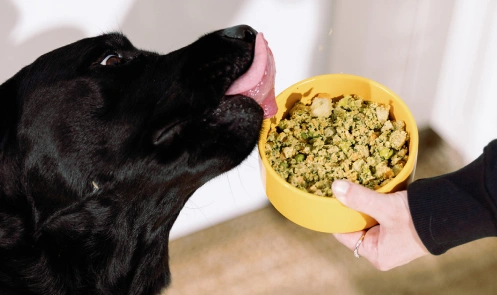
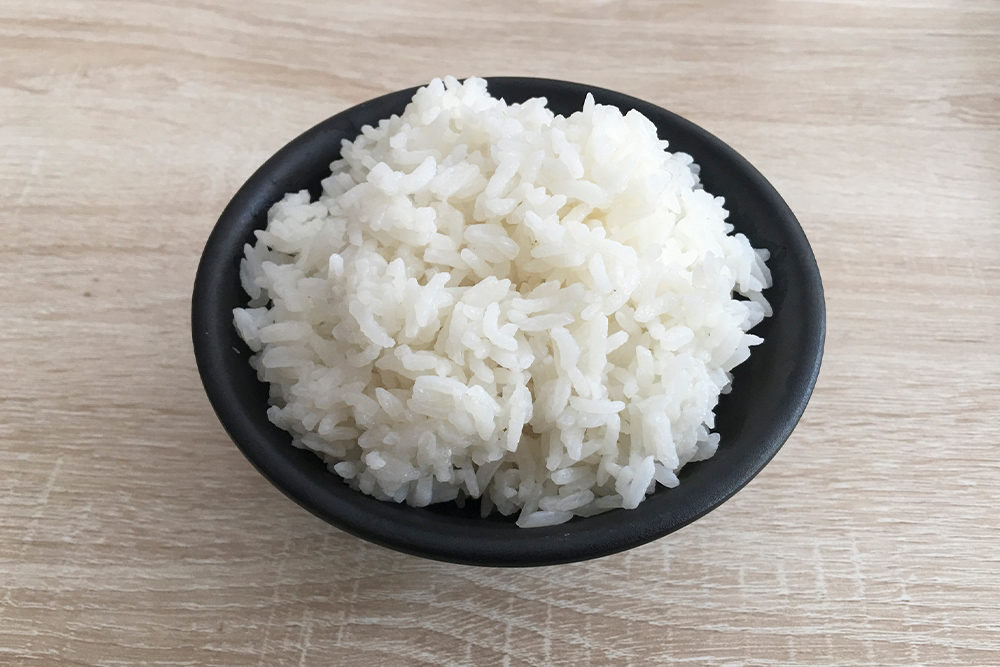
While you shouldn’t feed your dog anything in excess, cooked rice is about as harmless as it gets — and in some cases, quite helpful. It’s why some of our recipes even start with it.
Cooked rice mixed with a protein can even be a good option for settling your dog’s tummy if he has an upset stomach. Moreover, here are a few other things to keep in mind when it comes to feeding your dog rice:
- While brown rice has more protein and fiber than white rice, plain white rice is the best choice for a dog with an upset stomach since it’s less likely to cause diarrhea and will be converted more quickly into energy for your dog.
- If you’re going to feed your dog rice, stick with plain rice without any additional salt, butter or broth added to it — your dog is better off without the extra additives and will find it delicious either way.
- Don’t use rice as a meal-substitute except for in circumstances where your dog can’t keep anything else down. Ideally, your dog needs more nutrients, protein and healthy fat than rice can provide.
How much rice should my dog eat?
Because rice is carbohydrate-dense, it can lead to weight gain when given to your dog in excess. Commercially produced dry kibble often contains rice as a main ingredient. Like humans, carbohydrates are an important source of fuel for your dog but should be included as part of a well-balanced diet.
A nutritious dog chow will also contain an ample amount of protein, vitamins, minerals and healthy fats. Make sure the food you’re feeding your dog has enough of these diverse nutrients to keep your dog healthy.
When treating your dog to rice that isn’t included in his or her meal, it’s a good idea to follow the 10% rule: only around 10% of your dog’s daily caloric intake should come from treats or snacks. It’s not so much about the nutritional value as it is the potential for weight gain.
Keep the rice trick in your back pocket the next time your furry friend is having trouble keeping his food down and don’t panic if they get into your leftovers – a little rice won’t hurt.