Next time your movie night snack gets spilled all over the couch, is it okay if your dog manages to get a few pieces of popcorn before you can clean it up (as if you could really stop him)?
The short answer is yes — but you should avoid feeding your dog popcorn in large quantities, especially if it’s flavored with butter, salt or sugar. With minerals like magnesium, zinc and phosphorus, plus dietary fiber and relatively few calories, plain, unbuttered popcorn certainly isn’t the worst thing your dog can get his paws on. Here are a few things to keep in mind when it comes to your dog eating popcorn:
Popcorn kernels can get in your dog’s teeth or pose a choking hazard, so avoid letting your dog eat unpopped kernels or half-popped corn from the bottom of a microwave popcorn bag.
Butter, oil and excess salt can be bad for your dog, leading to obesity in the long-term and other obesity-related diseases, so it’s best to stick to unbuttered popcorn if you’re going to give your dog some of your favorite late-night snack.
If your dog does get a few pieces of buttered or otherwise flavored popcorn from between your couch seat cushions, it’s nothing to sweat; just don’t make it a regular habit.
What popcorn can my dog eat?
Popcorn comes in all shapes and sizes — some healthier than others for your dog.
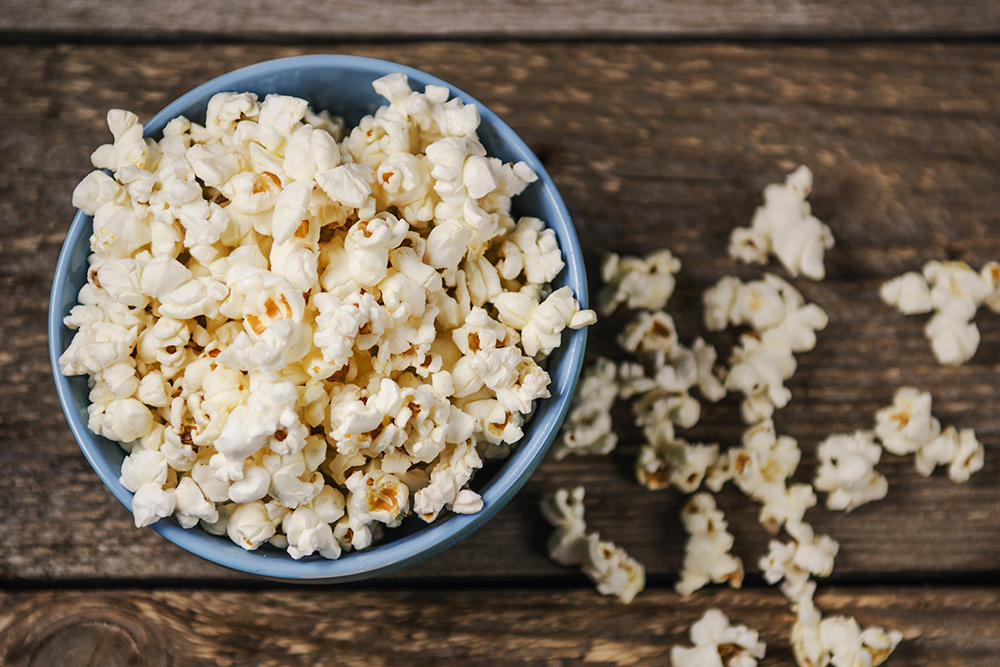
- Plain, air-popped popcorn without seasoning, butter or flavoring is best. A few pieces here and there is an inoffensive snack that won’t do much for your dog nutritionally, but also comes with a low risk of gastrointestinal issues.
- Caramel corn should be avoided. While caramel itself may not be toxic to dogs, the sugar content could cause issues for their health and may be particularly dangerous to diabetic dogs.
- Cheesy popcorn should be avoided as well. The higher levels of fat and sodium could cause digestive problems for your dog with even just a few handfuls.
Popcorn to Avoid for Dogs
- Microwave popcorn should be avoided for dogs. The added oils and salt make it unsafe for dogs. (https://www.petmd.com/dog/nutrition/can-dogs-eat-popcorn), (https://www.akc.org/expert-advice/nutrition/can-dogs-eat-popcorn)
- Caramel corn and kettle corn - the high sugar and additives can cause GI upset and contribute to weight gain. Sugar-free versions may contain xylitol which is toxic to dogs (https://www.petmd.com/dog/nutrition/can-dogs-eat-popcorn)
- Popcorn with butter or salt - butter and salt increase risks of stomach upset, weight gain, and other more serious conditions (pancreatitis). (https://www.petmd.com/dog/nutrition/can-dogs-eat-popcorn), (https://www.akc.org/expert-advice/nutrition/can-dogs-eat-popcorn)
- Popcorn kernels - should be removed. Unpopped or partially popped kernels are a choking hazard and can lodge in teeth, causing discomfort and dental issues
How much is too much popcorn for my dog?
In general, you should follow the 10% rule when feeding your dog treats or snacks: only around 10% of your dog’s daily caloric intake should come from these items — and this includes popcorn.
Of course, you’ll want to fall on the conservative side of your 10% estimate when it comes to letting your dog eat popcorn. It’s difficult to measure the exact percentage of something so small and snackable, and it’s not worth risking the stomach issues.
The key to your dog’s long-term health is a well-balanced, complete diet. While treats like popcorn can have a place in a healthy diet, they should be kept to a minimum for prolonged vitality.